
OH · Corporation formation
Form a corporation in Ohio
Incorporate a Ohio corporation: $99 filing fee, 3-7 business days processing with the Ohio Secretary of State. Choose C-Corp or S-Corp tax election. Includes a registered agent (Ohio calls this a statutory agent). No annual report and central US distribution access.
Business Formation + Registered Agent
+ $99 OH state filing fee
- Ohio corporation formation ($149 one-time)
- OH Registered Agent — 1 year included ($149/yr after)

Ohio corporation at a glance
Quick reference for incorporating a for-profit corporation in Ohio with the Ohio Secretary of State. C-Corp vs S-Corp is a tax election on the same filing.
| State filing fee | $99 |
|---|---|
| Processing time | 3-7 business days |
| Filing agency | Ohio Secretary of State |
| Registered agent | Required — physical OH street address |
| Annual report | Not required |
| Franchise / corporate tax | Commercial Activity Tax above $150k gross receipts |
| Registered agent (ClearFormation) | Included with formation |

How to form a corporation in Ohio
There are six steps. File Articles of Incorporation with the Ohio Secretary of State, pay the $99 state fee, and appoint a Ohio registered agent. Most filings finish in 3-7 business days.
- 1
Step 1: Name your Ohio corporation
- Your name must include "Corporation", "Incorporated", "Company", or an abbreviation.
- It must be unique on Ohio Secretary of State records.
- Search before you file.
- Words like "bank" may need approval.
- ClearFormation runs a name check before we file.
- 2
Step 2: Appoint a Ohio registered agent
- Ohio requires a registered agent (Ohio calls this a statutory agent) with a physical OH street address.
- They accept lawsuits and state mail during business hours.
- A commercial agent is for when you don't have a local street address or can't be there during business hours.
- ClearFormation includes agent service in all 50 states.
- 3
Step 3: File with the Ohio Secretary of State
- Submit Articles of Incorporation with the $99 state fee.
- Processing is usually 3-7 business days.
- You list your name, agent, authorized shares, and incorporator.
- ClearFormation prepares and files online for you.
- 4
Step 4: Issue stock and adopt bylaws
- Hold an organizational meeting: adopt bylaws, appoint directors, elect officers, and issue founder stock.
- If stock vests, file an IRS 83(b) election within 30 days.
- Included with ClearFormation.
- 5
Step 5: Get your EIN from the IRS
- You need an EIN to open a US bank account, hire staff, and file Form 1120.
- The IRS issues EINs for free.
- ClearFormation can file Form SS-4 for you — including for non-US founders without an SSN.
- 6
Step 6: Stay compliant in Ohio
- Ohio does not require a corporate annual report.
- Keep your agent active.
- Hold board meetings.
- File corporate tax returns.
Form your OH corporation now
We prepare the filing, include a OH registered agent, and walk you through bylaws and stock. Choose C-Corp or S-Corp tax election.
How much does a Ohio corporation cost?
- One-time state filing fee to the Ohio Secretary of State
- Ongoing state reports and any franchise or income tax
- Federal EIN and annual Form 1120 corporate tax return
One-time Ohio formation cost
The Ohio corporation filing fee is $99. Bylaws and stock certificates are included with ClearFormation.
Ongoing Ohio corporation cost
Ohio does not require a corporate annual report. Commercial Activity Tax above $150k gross receipts. A C-Corp files federal Form 1120 and pays 21% federal corporate tax on profits. An S-Corp election (Form 2553) uses Form 1120-S instead.
What's included with ClearFormation
- Registered agent service bundled into every plan
- Bylaws, stock certificates, and organizational consent
- Optional EIN filing for non-US founders without an SSN
Fees reviewed against Ohio Secretary of State (last reviewed June 2026).
Ready to file in Ohio?
State fee is $99. Our formation plan includes your first year of OH registered agent service.

Post-incorporation checklist for a Ohio corporation
Stamped Articles from the Ohio Secretary of State create your company legally. Complete these steps in the first 30 days:
1. Adopt bylaws and hold the organizational meeting
- Appoint the initial board and adopt bylaws.
- Elect officers and authorize a bank account.
- Approve the founder stock plan at the organizational meeting.
2. Issue founder stock and file 83(b) elections
- Issue founder shares at par value on day one.
- If stock vests, each founder must file an IRS 83(b) election within 30 days.
- Missing the 83(b) window cannot be fixed later.
3. Get your EIN and open a corporate bank account
- Get a corporate EIN — never use a founder SSN for the business.
- Bring stamped Articles, EIN letter, bylaws, and a board resolution to the bank.
- Keep personal and corporate funds in separate accounts.
4. Lock in tax and compliance calendars
- Federal Form 1120 is due April 15 for calendar-year corps.
- State: Ohio has no corporate annual report, but you still file state corporate taxes. Commercial Activity Tax above $150k gross receipts.
- Foreign-owned corps may need Form 5472 with the corporate return.
5. BOI report — only if foreign-formed
- Domestic US corps do not file a BOI report as of March 2025.
- Foreign-formed entities registered in the US must file within 30 days of US registration.
- Annual cadence: board meeting, shareholder meeting, Form 1120, agent renewal, updated cap table.
Start your OH corporation today
Name check, state filing, registered agent, bylaws, and stock certificates in one checkout. Choose C-Corp or S-Corp tax election.

What is a Ohio corporation?
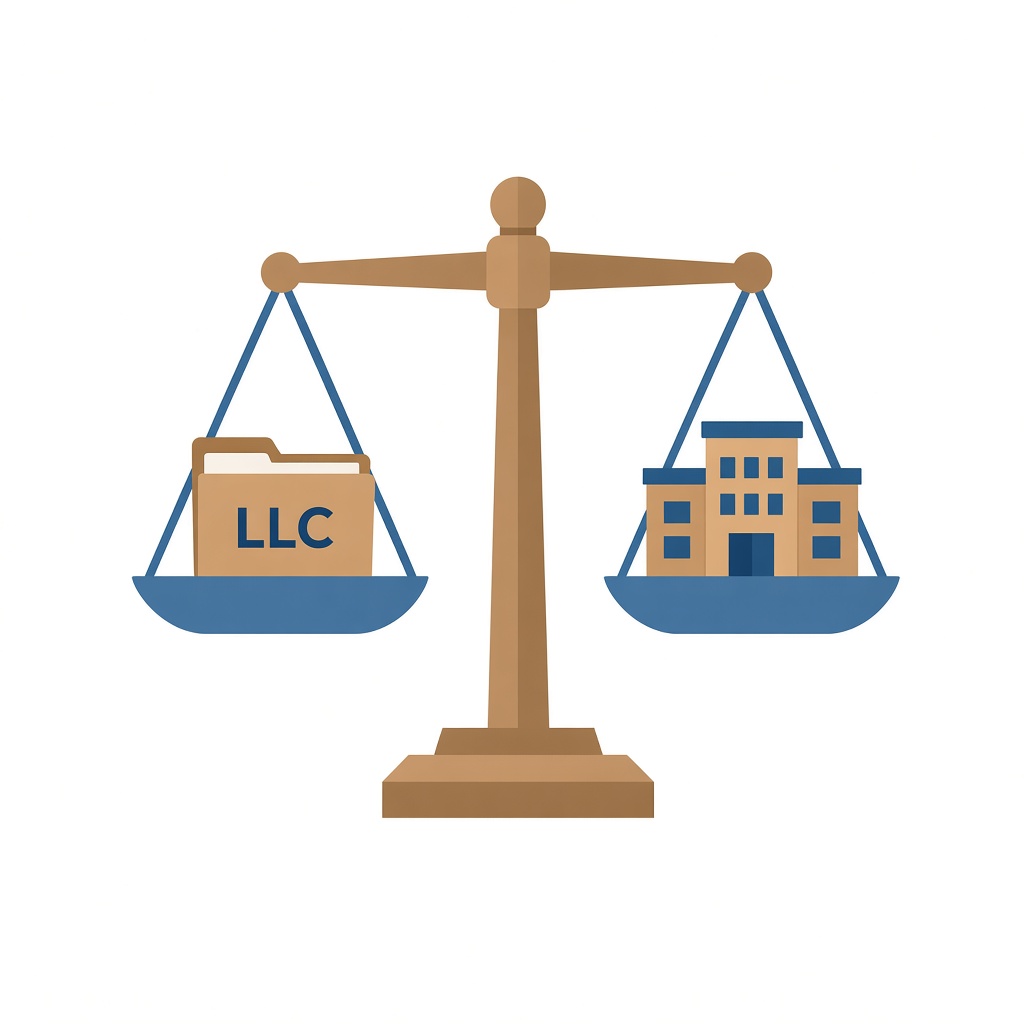
A Ohio corporation is a for-profit company filed with the Ohio Secretary of State. The same entity can be taxed as a C-Corp (default — Form 1120, 21% federal corporate tax) or an S-Corp (Form 2553 pass-through). It is built for stock issuance, employee equity, and fundraising. For a full LLC vs corporation comparison, see our LLC vs corporation guide.
No annual report and central US distribution access. Incorporate in OH when you operate primarily here and want a domestic corporation without a Delaware flip. Non-US founders can own 100%.

Why incorporate in Ohio?
- VC-ready structure — preferred stock, board governance, ISO options.
- One domestic filing — $99 with the Ohio Secretary of State; simpler than DE + foreign qualification for local operators.
- Limited liability — shareholders are generally not personally liable for corporate debts.

Ohio corporation pros and cons
Drawbacks to weigh before you incorporate:
- C-Corp default means double taxation — 21% federal corporate tax, then tax again on dividends. An S-Corp election avoids that if you qualify.
- More formalities — annual board and shareholder meetings, minutes, bylaws, and stock ledger maintenance.
- Ohio corporate tax: Commercial Activity Tax above $150k gross receipts.
- US VCs often prefer Delaware C-Corp over a Ohio domestic corporation for priced rounds.
Types of corporations in Ohio
- C-Corporation — default tax treatment of the same corporation; unlimited shareholders and multiple stock classes.
- S-Corporation — same formation filing, but elect pass-through tax via IRS Form 2553 (100-shareholder cap, one stock class).
- Professional corporation (PC) — may be required for licensed professions; check Ohio Secretary of State rules.
- Nonprofit corporation — separate filing path if you seek 501(c)(3) status (not covered here).

Is a Ohio corporation right for you?
Compare alternatives before filing:
- LLC in Ohio — simpler pass-through tax for owner-operated businesses.
- S-Corp vs LLC — payroll tax savings with added compliance.
- LLC vs corporation — full comparison of structures.
- Best state to form a business — if you're weighing Ohio vs Delaware.

Corporate governance in Ohio
A Ohio corporation is more formal than an LLC. After the Ohio Secretary of State approves your filing:
- Adopt corporate bylaws.
- Appoint a board of directors.
- Elect officers (President, Secretary, Treasurer — titles can vary).
- Issue stock to founders at the organizational meeting.
What does a corporate board of directors do?
- Oversees major decisions: budgets, stock issuances, CEO hire, financings.
- Early-stage founders often sit on the board themselves.
- Document decisions in written consents or meeting minutes.
- Skipping minutes is the fastest way to lose corporate veil protection.
What kind of stock can I issue?
- Authorize common stock for founders in your Articles of Incorporation.
- Reserve preferred stock for future investors when needed.
- List authorized share counts and par value on the formation document.
- ClearFormation includes bylaws and stock certificates for founder issuance.
Officers and day-to-day operations
- Officers run daily operations; the board sets strategy.
- A solo founder can be the sole director and hold all officer roles.
- Update cap table, bylaws, and board composition as you add co-founders or investors.

Foreign entities doing business in Ohio
- Out-of-state corps with staff, offices, or major sales in Ohio may need to register as a foreign corporation with the Ohio Secretary of State.
- That filing needs a OH registered agent with a physical in-state address — included with ClearFormation.
- If you incorporate in Ohio but operate elsewhere, you may need to foreign-qualify in those states instead.
- See our foreign qualification guide or get a OH registered agent.

Ohio Secretary of State contact information
- File Articles of Incorporation with the Ohio Secretary of State.
- Search the state business database to confirm your name is available.
- Keep stamped formation docs with your bylaws, stock certificates, and EIN letter for banking and investors.

How is a Ohio corporation taxed?
By default a Ohio corporation is a C-Corp and pays tax at these levels:
- Files IRS Form 1120 and pays 21% federal corporate income tax on profits.
- Dividends to shareholders are taxed again on personal returns — the classic double tax.
- State level: Commercial Activity Tax above $150k gross receipts
Eligible US owners can elect S-Corp treatment (Form 2553) on the same corporation if they meet IRS rules. See S-Corp vs LLC. Operating outside Ohio? You may need to foreign-qualify elsewhere.
Quarterly estimated taxes and payroll
- Profitable C-Corps often pay quarterly estimated federal tax (Form 1120-W).
- With employees in Ohio, withhold payroll taxes and file state unemployment returns.
- Budget for CPA support — corporate compliance is heavier than a pass-through LLC.
Foreign-owned corporations
- 25%+ foreign ownership may require IRS Form 5472 with the corporate return.
- Non-US founders should plan for this from incorporation day.
How to dissolve a Ohio corporation
- Get board and shareholder approval to dissolve.
- File Articles of Dissolution with the Ohio Secretary of State.
- Pay outstanding state taxes and cancel foreign registrations.
- File a final IRS Form 1120. Skipping formal dissolution can trigger ongoing report fees.
Common Ohio corporation mistakes
- Missing the 83(b) election window. Founders with vesting stock must file within 30 days of issuance — there is no extension.
- Skipping board meetings and minutes. Corporate formalities preserve the liability shield; skipping them is the #1 veil-piercing risk.
- Commingling personal and corporate funds. Use a dedicated corporate bank account from day one.
- Missing registered agent renewals. Can cost you good standing or trigger administrative dissolution.
Corporation vs LLC in Ohio: which should you form?
Both entities give you the same liability shield. The main differences are tax, ownership, and fundraising options. A corporation can be taxed as a C-Corp (default) or an S-Corp (Form 2553).
Form an LLC in Ohio if
- You want pass-through tax with less paperwork.
- You do not plan to raise US venture capital.
- You run a consulting firm, agency, store, or freelance business.
Form a corporation in Ohio if
- You plan to raise from VCs or angels via SAFEs (typically C-Corp tax).
- You want to grant ISO stock options to employees (requires C-Corp tax treatment).
- You need multiple share classes for investors, or you want an S-Corp election as a corporation.
Rule of thumb: US VCs usually prefer a Delaware C-Corp. A Ohio corporation fits local operating businesses not on the VC track.
Ready to form your OH corporation?
Everything you need to launch and maintain your Ohio corporation.
Questions?