
WA · Corporation formation
Form a corporation in Washington
Incorporate a Washington corporation: $200 filing fee, 2-3 business days online processing with the Washington Secretary of State. Choose C-Corp or S-Corp tax election. Includes a registered agent. No state personal income tax and a deep Seattle tech market.
Business Formation + Registered Agent
+ $200 WA state filing fee
- Washington corporation formation ($149 one-time)
- WA Registered Agent — 1 year included ($149/yr after)

Washington corporation at a glance
Quick reference for incorporating a for-profit corporation in Washington with the Washington Secretary of State. C-Corp vs S-Corp is a tax election on the same filing.
| State filing fee | $200 |
|---|---|
| Processing time | 2-3 business days online |
| Filing agency | Washington Secretary of State |
| Registered agent | Required — physical WA street address |
| Annual report | Annual Report — $60, due Anniversary month |
| Franchise / corporate tax | None (B&O tax applies on gross receipts) |
| Registered agent (ClearFormation) | Included with formation |

How to form a corporation in Washington
There are six steps. File Articles of Incorporation with the Washington Secretary of State, pay the $200 state fee, and appoint a Washington registered agent. Most filings finish in 2-3 business days online.
- 1
Step 1: Name your Washington corporation
- Your name must include "Corporation", "Incorporated", "Company", or an abbreviation.
- It must be unique on Washington Secretary of State records.
- Search before you file.
- Words like "bank" may need approval.
- ClearFormation runs a name check before we file.
- 2
Step 2: Appoint a Washington registered agent
- Washington requires a registered agent with a physical WA street address.
- They accept lawsuits and state mail during business hours.
- A commercial agent is for when you don't have a local street address or can't be there during business hours.
- ClearFormation includes agent service in all 50 states.
- 3
Step 3: File with the Washington Secretary of State
- Submit Articles of Incorporation with the $200 state fee.
- Processing is usually 2-3 business days online.
- You list your name, agent, authorized shares, and incorporator.
- ClearFormation prepares and files online for you.
- 4
Step 4: Issue stock and adopt bylaws
- Hold an organizational meeting: adopt bylaws, appoint directors, elect officers, and issue founder stock.
- If stock vests, file an IRS 83(b) election within 30 days.
- Included with ClearFormation.
- 5
Step 5: Get your EIN from the IRS
- You need an EIN to open a US bank account, hire staff, and file Form 1120.
- The IRS issues EINs for free.
- ClearFormation can file Form SS-4 for you — including for non-US founders without an SSN.
- 6
Step 6: Stay compliant in Washington
- Washington requires the Annual Report ($60), due Anniversary month.
- None (B&O tax applies on gross receipts).
- ClearFormation tracks deadlines and pre-fills your report.
Form your WA corporation now
We prepare the filing, include a WA registered agent, and walk you through bylaws and stock. Choose C-Corp or S-Corp tax election.
How much does a Washington corporation cost?
- One-time state filing fee to the Washington Secretary of State
- Ongoing state reports and any franchise or income tax
- Federal EIN and annual Form 1120 corporate tax return
One-time Washington formation cost
The Washington corporation filing fee is $200. Bylaws and stock certificates are included with ClearFormation.
Ongoing Washington corporation cost
The Annual Report is $60, due Anniversary month. None (B&O tax applies on gross receipts). A C-Corp files federal Form 1120 and pays 21% federal corporate tax on profits. An S-Corp election (Form 2553) uses Form 1120-S instead.
What's included with ClearFormation
- Registered agent service bundled into every plan
- Bylaws, stock certificates, and organizational consent
- Optional EIN filing for non-US founders without an SSN
Fees reviewed against Washington Secretary of State (last reviewed June 2026).
Ready to file in Washington?
State fee is $200. Our formation plan includes your first year of WA registered agent service.

Post-incorporation checklist for a Washington corporation
Stamped Articles from the Washington Secretary of State create your company legally. Complete these steps in the first 30 days:
1. Adopt bylaws and hold the organizational meeting
- Appoint the initial board and adopt bylaws.
- Elect officers and authorize a bank account.
- Approve the founder stock plan at the organizational meeting.
2. Issue founder stock and file 83(b) elections
- Issue founder shares at par value on day one.
- If stock vests, each founder must file an IRS 83(b) election within 30 days.
- Missing the 83(b) window cannot be fixed later.
3. Get your EIN and open a corporate bank account
- Get a corporate EIN — never use a founder SSN for the business.
- Bring stamped Articles, EIN letter, bylaws, and a board resolution to the bank.
- Keep personal and corporate funds in separate accounts.
4. Lock in tax and compliance calendars
- Federal Form 1120 is due April 15 for calendar-year corps.
- State: Annual Report is $60, due Anniversary month. None (B&O tax applies on gross receipts).
- Foreign-owned corps may need Form 5472 with the corporate return.
5. BOI report — only if foreign-formed
- Domestic US corps do not file a BOI report as of March 2025.
- Foreign-formed entities registered in the US must file within 30 days of US registration.
- Annual cadence: board meeting, shareholder meeting, Form 1120, Annual Report renewal, updated cap table.
Start your WA corporation today
Name check, state filing, registered agent, bylaws, and stock certificates in one checkout. Choose C-Corp or S-Corp tax election.

What is a Washington corporation?
A Washington corporation is a for-profit company filed with the Washington Secretary of State. The same entity can be taxed as a C-Corp (default — Form 1120, 21% federal corporate tax) or an S-Corp (Form 2553 pass-through). It is built for stock issuance, employee equity, and fundraising. For a full LLC vs corporation comparison, see our LLC vs corporation guide.
No state personal income tax and a deep Seattle tech market. Incorporate in WA when you operate primarily here and want a domestic corporation without a Delaware flip. Non-US founders can own 100%.

Why incorporate in Washington?
- VC-ready structure — preferred stock, board governance, ISO options.
- One domestic filing — $200 with the Washington Secretary of State; simpler than DE + foreign qualification for local operators.
- Limited liability — shareholders are generally not personally liable for corporate debts.

Washington corporation pros and cons
Drawbacks to weigh before you incorporate:
- C-Corp default means double taxation — 21% federal corporate tax, then tax again on dividends. An S-Corp election avoids that if you qualify.
- More formalities — annual board and shareholder meetings, minutes, bylaws, and stock ledger maintenance.
- Washington corporate tax: None (B&O tax applies on gross receipts).
- US VCs often prefer Delaware C-Corp over a Washington domestic corporation for priced rounds.
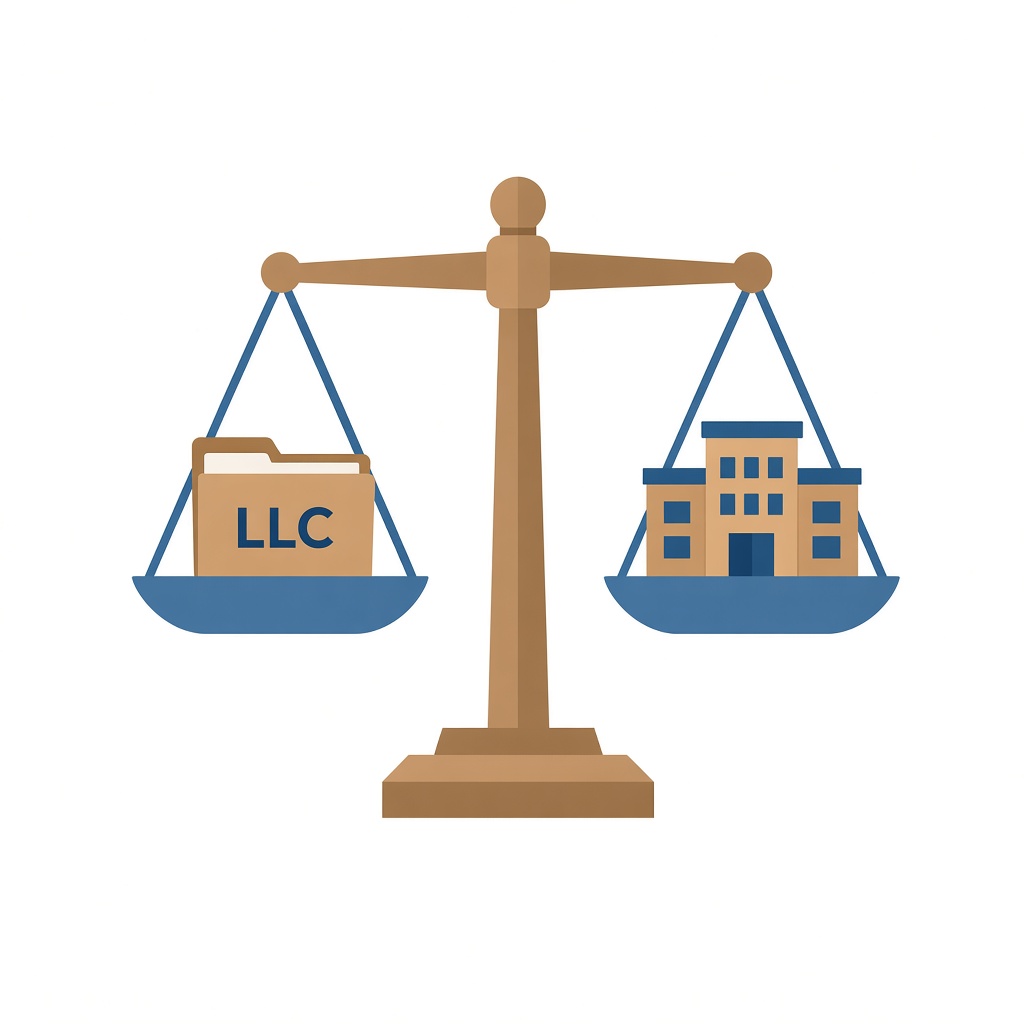
Types of corporations in Washington
- C-Corporation — default tax treatment of the same corporation; unlimited shareholders and multiple stock classes.
- S-Corporation — same formation filing, but elect pass-through tax via IRS Form 2553 (100-shareholder cap, one stock class).
- Professional corporation (PC) — may be required for licensed professions; check Washington Secretary of State rules.
- Nonprofit corporation — separate filing path if you seek 501(c)(3) status (not covered here).

Is a Washington corporation right for you?
Compare alternatives before filing:
- LLC in Washington — simpler pass-through tax for owner-operated businesses.
- S-Corp vs LLC — payroll tax savings with added compliance.
- LLC vs corporation — full comparison of structures.
- Best state to form a business — if you're weighing Washington vs Delaware.

Corporate governance in Washington
A Washington corporation is more formal than an LLC. After the Washington Secretary of State approves your filing:
- Adopt corporate bylaws.
- Appoint a board of directors.
- Elect officers (President, Secretary, Treasurer — titles can vary).
- Issue stock to founders at the organizational meeting.
What does a corporate board of directors do?
- Oversees major decisions: budgets, stock issuances, CEO hire, financings.
- Early-stage founders often sit on the board themselves.
- Document decisions in written consents or meeting minutes.
- Skipping minutes is the fastest way to lose corporate veil protection.
What kind of stock can I issue?
- Authorize common stock for founders in your Articles of Incorporation.
- Reserve preferred stock for future investors when needed.
- List authorized share counts and par value on the formation document.
- ClearFormation includes bylaws and stock certificates for founder issuance.
Officers and day-to-day operations
- Officers run daily operations; the board sets strategy.
- A solo founder can be the sole director and hold all officer roles.
- Update cap table, bylaws, and board composition as you add co-founders or investors.

Foreign entities doing business in Washington
- Out-of-state corps with staff, offices, or major sales in Washington may need to register as a foreign corporation with the Washington Secretary of State.
- That filing needs a WA registered agent with a physical in-state address — included with ClearFormation.
- If you incorporate in Washington but operate elsewhere, you may need to foreign-qualify in those states instead.
- See our foreign qualification guide or get a WA registered agent.

Washington Secretary of State contact information
- File Articles of Incorporation with the Washington Secretary of State.
- Search the state business database to confirm your name is available.
- Keep stamped formation docs with your bylaws, stock certificates, and EIN letter for banking and investors.

How is a Washington corporation taxed?
By default a Washington corporation is a C-Corp and pays tax at these levels:
- Files IRS Form 1120 and pays 21% federal corporate income tax on profits.
- Dividends to shareholders are taxed again on personal returns — the classic double tax.
- State level: None (B&O tax applies on gross receipts)
- File the Annual Report ($60) with the Washington Secretary of State.
Eligible US owners can elect S-Corp treatment (Form 2553) on the same corporation if they meet IRS rules. See S-Corp vs LLC. Operating outside Washington? You may need to foreign-qualify elsewhere.
Quarterly estimated taxes and payroll
- Profitable C-Corps often pay quarterly estimated federal tax (Form 1120-W).
- With employees in Washington, withhold payroll taxes and file state unemployment returns.
- Budget for CPA support — corporate compliance is heavier than a pass-through LLC.
Foreign-owned corporations
- 25%+ foreign ownership may require IRS Form 5472 with the corporate return.
- Non-US founders should plan for this from incorporation day.
How to dissolve a Washington corporation
- Get board and shareholder approval to dissolve.
- File Articles of Dissolution with the Washington Secretary of State.
- Pay outstanding state taxes and cancel foreign registrations.
- File a final IRS Form 1120. Skipping formal dissolution can trigger ongoing report fees.
Common Washington corporation mistakes
- Missing the 83(b) election window. Founders with vesting stock must file within 30 days of issuance — there is no extension.
- Skipping board meetings and minutes. Corporate formalities preserve the liability shield; skipping them is the #1 veil-piercing risk.
- Commingling personal and corporate funds. Use a dedicated corporate bank account from day one.
- Missing the annual report. Can cost you good standing or trigger administrative dissolution.
Corporation vs LLC in Washington: which should you form?
Both entities give you the same liability shield. The main differences are tax, ownership, and fundraising options. A corporation can be taxed as a C-Corp (default) or an S-Corp (Form 2553).
Form an LLC in Washington if
- You want pass-through tax with less paperwork.
- You do not plan to raise US venture capital.
- You run a consulting firm, agency, store, or freelance business.
Form a corporation in Washington if
- You plan to raise from VCs or angels via SAFEs (typically C-Corp tax).
- You want to grant ISO stock options to employees (requires C-Corp tax treatment).
- You need multiple share classes for investors, or you want an S-Corp election as a corporation.
Rule of thumb: US VCs usually prefer a Delaware C-Corp. A Washington corporation fits local operating businesses not on the VC track.
Washington corporation questions
Also for Washington founders: Form an LLC in Washington · Washington registered agent
Ready to form your WA corporation?
Everything you need to launch and maintain your Washington corporation.
Questions?